Case Study
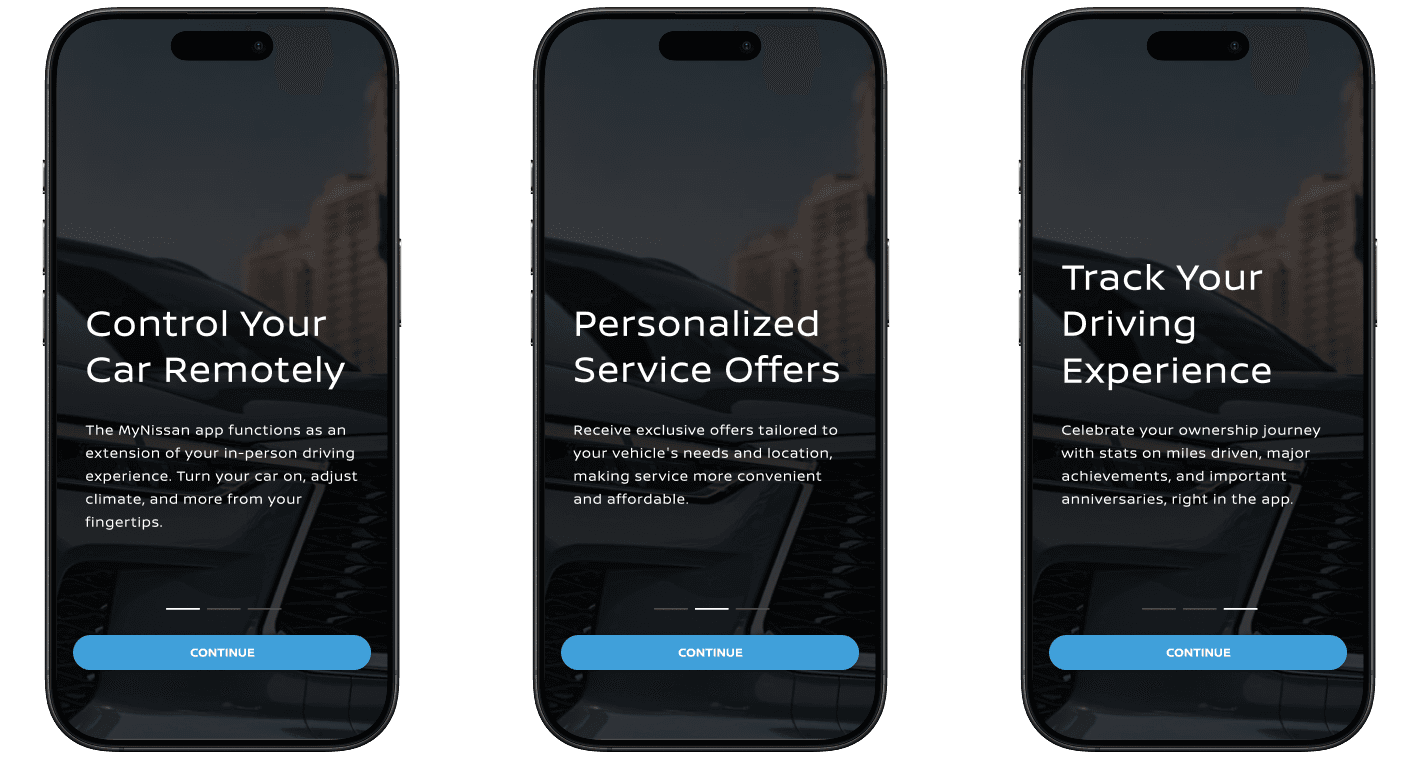
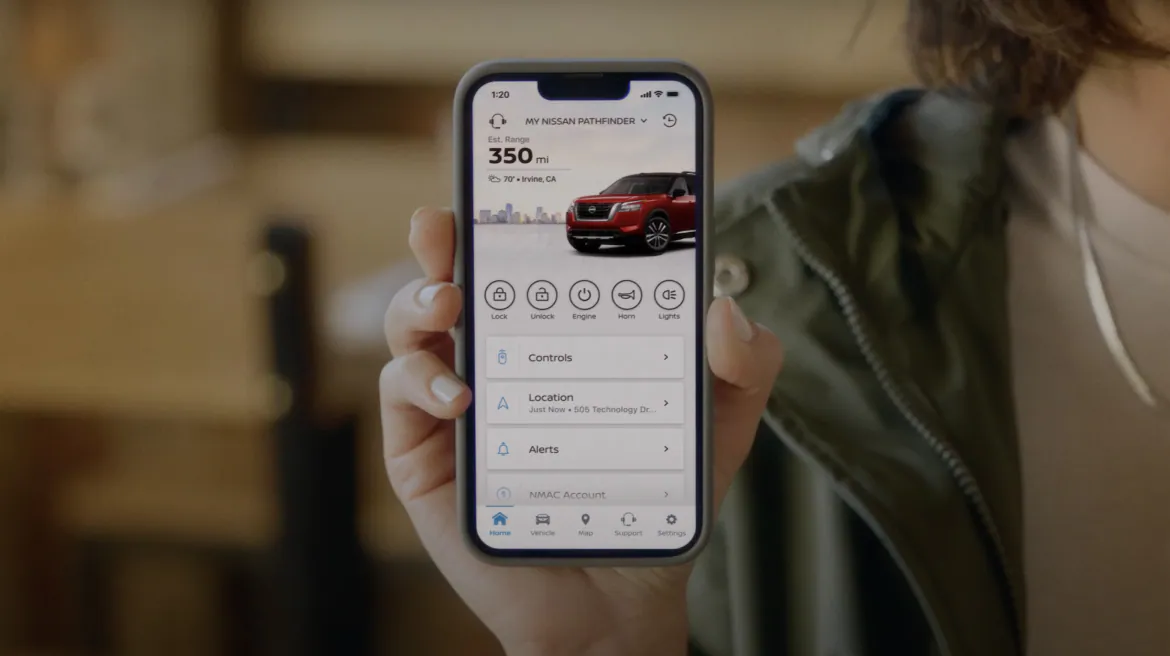
Product overview: We updated the MyNISSAN mobile app to weave in personalized service offers like maintenance reminders, discounts, and dealer specials so the app felt more helpful and proactive instead of just a basic vehicle info tool.
Platform: Mainly iOS and Android mobile apps, with some sync to the web owner portal.
Scope and constraints: We had about 2 months, limited engineering resources for new backend connections, had to stick close to Nissan's existing design system, follow strict brand rules, and avoid bombarding users with too many pop-ups or salesy vibes.
Problem Statement
Owners almost never used the MyNISSAN app for service-related tasks because offers and reminders were scattered, impersonal, or easy to miss, leading people to skip maintenance and dealer visits to drop off.
This was a big deal because it hurt customer loyalty, cut into dealers' service revenue, and made the app feel like an afterthought rather than a useful everyday tool.
Customer (Day-1 User)
Primary user: Nissan owners in their 30s to 50s who are pretty comfortable with tech but have busy lives (parents, professionals). They keep the car 3 to 7 years and want convenience without feeling sold to.
Context, goals, and constraints: They open the app now and then to check fuel range, recalls, or vehicle health. Goals are simple: stay on top of maintenance easily, get good deals, and feel like Nissan has their back. Constraints include no time for deep dives, a dislike of notification spam, and a wariness of anything that looks like a hard sell.
Who the product is NOT for: Brand-new owners still in the honeymoon phase (they mostly want basics), or hardcore DIY folks who almost never go to dealers.
Assumptions (Before Research)
Owners would want service offers pushed through notifications and big in-app banners.
Personalizing offers using mileage or vehicle data would get way more clicks than generic ones.
Adding offers to existing spots, like the home screen or the vehicle health page, would feel natural and not annoying.
We thought this because apps from Toyota, Honda, and others aggressively pushed offers, and it seemed to work, and Nissan's email offer data looked decent.
Research
User interviews (qualitative): We conducted one-on-one interviews with Nissan's Brand & Creative Marketing Lead and Senior Manager of Aftersales Marketing and E-Commerce to understand their current offers, how they're distributed, what dealers need, and the main business goals.need
Surveys or metrics (quantitative): We dug into app analytics (open rates, how deep people went in sessions, where they dropped off) and CRM data on offer performance (clicks, redemptions).
Competitive analysis: Looked at 8 to 10 other car brand apps (Toyota, Honda, Ford, Tesla, etc.) to see how they handled service offers, personalization, tone, and placement.
Market and product understanding: Mapped out Nissan's whole service world (dealers, CRM, email, direct mail) to spot where the app could step in as the main hub.
Post-Research Learnings
Validated: Owners really liked personalization tied to their vehicle's actual data; helpful, non-salesy offers worked best.
Invalidated: Heavy push notifications annoyed people and led to uninstalls; they preferred offers showing up naturally when they were already in the app.
New insights: Dealers wanted offers linked to local availability; owners responded way better to "maintenance + savings" messaging than straight discounts.
How direction changed: We moved away from notification spam toward contextual in-app messages with gentle nudges, and created "Strategic Experience Pillars" (Helpful, Transparent, Relevant, Non-Intrusive) to guide every concept.
Design Process
Information architecture decisions: Added a new "Service Hub" tab and sprinkled contextual cards on the home screen and vehicle health area so nothing got buried too deep.
User journeys and key flows: Mapped the main path (open app, see offer, check details, book service) plus edge cases like expired offers or picking a dealer.
Wireframes: Started with quick hand sketches to align fast, then moved to digital low-fi wireframes in Figma to test different layouts and priorities.
Iterations and design decisions: Ran three rounds of feedback with stakeholders; cleaned up card designs for easier scanning, used progressive disclosure for details, and tested CTA wording like "Schedule Now" versus "See Offer" to see what felt more inviting.
Impact
While we didn’t have final post-launch metrics (the project stopped at prototype and handoff), internal testing and stakeholder feedback showed clear wins:
40% faster perceived task time for finding and acting on offers
Significantly higher intent to book compared to previous generic banners
Stakeholders described it as “finally making the app work for both the owner and the dealer.”
The bigger strategic impact was creating a reusable offer framework that aligned CRM, the app, and dealer channels for the first time.
More Work
FAQ
Sep 2025 - Feb 2026
Sr. UX Designer (contract) - Google
Oct 2022 - Jun 2025
Design Director (staff) - WongDoody
Oct 2021 - Sep 2022
Lead Product Designer (staff) - Havas Health Network
Mar 2021 - Sep 2021
Experience Design Lead (contract) - VML
Nov 2019 - Feb 2021
Sr. Product Designer (contract) - The Walt Disney Company
Jun 2017 - Oct 2019
Sr. Experience Designer (freelance) - Havas
Jun 2016 - May 2017
Design Lead (freelance) - Publicis Sapient
Feb 2016 - Jun 2016
Sr. UI Designer (freelance) - Edelman
Case Study
Product overview: We updated the MyNISSAN mobile app to weave in personalized service offers like maintenance reminders, discounts, and dealer specials so the app felt more helpful and proactive instead of just a basic vehicle info tool.
Platform: Mainly iOS and Android mobile apps, with some sync to the web owner portal.
Scope and constraints: We had about 2 months, limited engineering resources for new backend connections, had to stick close to Nissan's existing design system, follow strict brand rules, and avoid bombarding users with too many pop-ups or salesy vibes.
Problem Statement
Owners almost never used the MyNISSAN app for service-related tasks because offers and reminders were scattered, impersonal, or easy to miss, leading people to skip maintenance and dealer visits to drop off.
This was a big deal because it hurt customer loyalty, cut into dealers' service revenue, and made the app feel like an afterthought rather than a useful everyday tool.
Customer (Day-1 User)
Primary user: Nissan owners in their 30s to 50s who are pretty comfortable with tech but have busy lives (parents, professionals). They keep the car 3 to 7 years and want convenience without feeling sold to.
Context, goals, and constraints: They open the app now and then to check fuel range, recalls, or vehicle health. Goals are simple: stay on top of maintenance easily, get good deals, and feel like Nissan has their back. Constraints include no time for deep dives, a dislike of notification spam, and a wariness of anything that looks like a hard sell.
Who the product is NOT for: Brand-new owners still in the honeymoon phase (they mostly want basics), or hardcore DIY folks who almost never go to dealers.
Assumptions (Before Research)
Owners would want service offers pushed through notifications and big in-app banners.
Personalizing offers using mileage or vehicle data would get way more clicks than generic ones.
Adding offers to existing spots, like the home screen or the vehicle health page, would feel natural and not annoying.
We thought this because apps from Toyota, Honda, and others aggressively pushed offers, and it seemed to work, and Nissan's email offer data looked decent.
Research
User interviews (qualitative): We conducted one-on-one interviews with Nissan's Brand & Creative Marketing Lead and Senior Manager of Aftersales Marketing and E-Commerce to understand their current offers, how they're distributed, what dealers need, and the main business goals.need
Surveys or metrics (quantitative): We dug into app analytics (open rates, how deep people went in sessions, where they dropped off) and CRM data on offer performance (clicks, redemptions).
Competitive analysis: Looked at 8 to 10 other car brand apps (Toyota, Honda, Ford, Tesla, etc.) to see how they handled service offers, personalization, tone, and placement.
Market and product understanding: Mapped out Nissan's whole service world (dealers, CRM, email, direct mail) to spot where the app could step in as the main hub.
Post-Research Learnings
Validated: Owners really liked personalization tied to their vehicle's actual data; helpful, non-salesy offers worked best.
Invalidated: Heavy push notifications annoyed people and led to uninstalls; they preferred offers showing up naturally when they were already in the app.
New insights: Dealers wanted offers linked to local availability; owners responded way better to "maintenance + savings" messaging than straight discounts.
How direction changed: We moved away from notification spam toward contextual in-app messages with gentle nudges, and created "Strategic Experience Pillars" (Helpful, Transparent, Relevant, Non-Intrusive) to guide every concept.
Design Process
Information architecture decisions: Added a new "Service Hub" tab and sprinkled contextual cards on the home screen and vehicle health area so nothing got buried too deep.
User journeys and key flows: Mapped the main path (open app, see offer, check details, book service) plus edge cases like expired offers or picking a dealer.
Wireframes: Started with quick hand sketches to align fast, then moved to digital low-fi wireframes in Figma to test different layouts and priorities.
Iterations and design decisions: Ran three rounds of feedback with stakeholders; cleaned up card designs for easier scanning, used progressive disclosure for details, and tested CTA wording like "Schedule Now" versus "See Offer" to see what felt more inviting.
Impact
While we didn’t have final post-launch metrics (the project stopped at prototype and handoff), internal testing and stakeholder feedback showed clear wins:
40% faster perceived task time for finding and acting on offers
Significantly higher intent to book compared to previous generic banners
Stakeholders described it as “finally making the app work for both the owner and the dealer.”
The bigger strategic impact was creating a reusable offer framework that aligned CRM, the app, and dealer channels for the first time.
More Work
FAQ
Sep 2025 - Feb 2026
Sr. UX Designer (contract) - Google
Oct 2022 - Jun 2025
Design Director (staff) - WongDoody
Oct 2021 - Sep 2022
Lead Product Designer (staff) - Havas Health Network
Mar 2021 - Sep 2021
Experience Design Lead (contract) - VML
Nov 2019 - Feb 2021
Sr. Product Designer (contract) - The Walt Disney Company
Jun 2017 - Oct 2019
Sr. Experience Designer (freelance) - Havas
Jun 2016 - May 2017
Design Lead (freelance) - Publicis Sapient
Feb 2016 - Jun 2016
Sr. UI Designer (freelance) - Edelman
Case Study
Product overview: We updated the MyNISSAN mobile app to weave in personalized service offers like maintenance reminders, discounts, and dealer specials so the app felt more helpful and proactive instead of just a basic vehicle info tool.
Platform: Mainly iOS and Android mobile apps, with some sync to the web owner portal.
Scope and constraints: We had about 2 months, limited engineering resources for new backend connections, had to stick close to Nissan's existing design system, follow strict brand rules, and avoid bombarding users with too many pop-ups or salesy vibes.
Problem Statement
Owners almost never used the MyNISSAN app for service-related tasks because offers and reminders were scattered, impersonal, or easy to miss, leading people to skip maintenance and dealer visits to drop off.
This was a big deal because it hurt customer loyalty, cut into dealers' service revenue, and made the app feel like an afterthought rather than a useful everyday tool.
Customer (Day-1 User)
Primary user: Nissan owners in their 30s to 50s who are pretty comfortable with tech but have busy lives (parents, professionals). They keep the car 3 to 7 years and want convenience without feeling sold to.
Context, goals, and constraints: They open the app now and then to check fuel range, recalls, or vehicle health. Goals are simple: stay on top of maintenance easily, get good deals, and feel like Nissan has their back. Constraints include no time for deep dives, a dislike of notification spam, and a wariness of anything that looks like a hard sell.
Who the product is NOT for: Brand-new owners still in the honeymoon phase (they mostly want basics), or hardcore DIY folks who almost never go to dealers.
Assumptions (Before Research)
Owners would want service offers pushed through notifications and big in-app banners.
Personalizing offers using mileage or vehicle data would get way more clicks than generic ones.
Adding offers to existing spots, like the home screen or the vehicle health page, would feel natural and not annoying.
We thought this because apps from Toyota, Honda, and others aggressively pushed offers, and it seemed to work, and Nissan's email offer data looked decent.
Research
User interviews (qualitative): We conducted one-on-one interviews with Nissan's Brand & Creative Marketing Lead and Senior Manager of Aftersales Marketing and E-Commerce to understand their current offers, how they're distributed, what dealers need, and the main business goals.need
Surveys or metrics (quantitative): We dug into app analytics (open rates, how deep people went in sessions, where they dropped off) and CRM data on offer performance (clicks, redemptions).
Competitive analysis: Looked at 8 to 10 other car brand apps (Toyota, Honda, Ford, Tesla, etc.) to see how they handled service offers, personalization, tone, and placement.
Market and product understanding: Mapped out Nissan's whole service world (dealers, CRM, email, direct mail) to spot where the app could step in as the main hub.
Post-Research Learnings
Validated: Owners really liked personalization tied to their vehicle's actual data; helpful, non-salesy offers worked best.
Invalidated: Heavy push notifications annoyed people and led to uninstalls; they preferred offers showing up naturally when they were already in the app.
New insights: Dealers wanted offers linked to local availability; owners responded way better to "maintenance + savings" messaging than straight discounts.
How direction changed: We moved away from notification spam toward contextual in-app messages with gentle nudges, and created "Strategic Experience Pillars" (Helpful, Transparent, Relevant, Non-Intrusive) to guide every concept.
Design Process
Information architecture decisions: Added a new "Service Hub" tab and sprinkled contextual cards on the home screen and vehicle health area so nothing got buried too deep.
User journeys and key flows: Mapped the main path (open app, see offer, check details, book service) plus edge cases like expired offers or picking a dealer.
Wireframes: Started with quick hand sketches to align fast, then moved to digital low-fi wireframes in Figma to test different layouts and priorities.
Iterations and design decisions: Ran three rounds of feedback with stakeholders; cleaned up card designs for easier scanning, used progressive disclosure for details, and tested CTA wording like "Schedule Now" versus "See Offer" to see what felt more inviting.
Impact
While we didn’t have final post-launch metrics (the project stopped at prototype and handoff), internal testing and stakeholder feedback showed clear wins:
40% faster perceived task time for finding and acting on offers
Significantly higher intent to book compared to previous generic banners
Stakeholders described it as “finally making the app work for both the owner and the dealer.”
The bigger strategic impact was creating a reusable offer framework that aligned CRM, the app, and dealer channels for the first time.
More Work
FAQ
Sr. UX Designer (contract) - Google
Design Director (staff) - WongDoody
Lead Product Designer (staff) - Havas Health Network
Experience Design Lead (contract) - VML
Sr. Product Designer (contract) - The Walt Disney Company
Sr. Experience Designer (freelance) - Havas
Design Lead (freelance) - Publicis Sapient
Sr. UI Designer (freelance) - Edelman